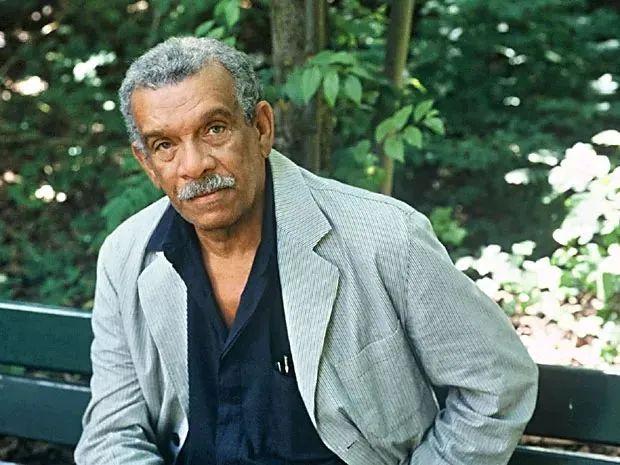
Epic Reconstruction: A Comparative Study of Ardakh Nurgaz’s Long Poem _A Garden of Trees_ and Derek
I. Formulating the Problem: How Is Epic Possible in a Postmodern Context? Although Ardakh Nurgaz’s long poem _A Garden of Trees: Meditations on the Postmodern Wars_ (2003) and Derek Walcott’s _Omeros_ (1990) emerged from different geographical, historical, and cultural contexts, they share a fundamental question that deserves closer examination: After the heroes, national communities, historical continuity, and grand narratives upon which traditional epic poetry was founded have been challenged by the crisis of modernity, how can poetry re-establish connections between human beings and history, civilization, the land, and memory? Both works can be examined from the perspective of the reconstruction of the modern epic, although their approaches to this reconstruction differ significantly. - _Omeros_ begins with the colonial history of the Caribbean, elevating ordinary fishermen, island inhabitants, and their everyday lives to the center of epic narration. In doing so, it rewrites the historical experiences of a people whose voices have been obscured by Western historiography and the classical literary tradition. - _A Garden of Trees_, by contrast, emerges from the spiritual shock produced by the 2003 Iraq War. It interweaves war, historical trauma, civilizational memory, and individual consciousness, seeking to rediscover the meaning of human history amid the spiritual ruins created by modern warfare. The similarities between these two works therefore do not lie in their adoption of an identical epic form. Rather, both confront a world that can no longer be adequately explained by traditional epic conventions and attempt to create a new poetic understanding of history. One distinction deserves particular emphasis: Walcott’s _Omeros_ is generally regarded as a postcolonial epic, whereas Nurgaz’s _A Garden of Trees_ is more appropriately understood as a spiritual epic or an epic-length poem with a distinctly postmodern and anti-epic sensibility. A comparison of the two should not simply place them within the same literary movement. Instead, it should investigate how each transforms the epic conception of history, heroism, space, and narrative structure. II. Differences in Historical Experience: Colonial Trauma and Postmodern Warfare 1\. _Omeros_: Rewriting Colonial History _What to Read This Summer—2026 | STANFORD magazine_ Published in 1990, _Omeros_ is one of Walcott’s most representative long poems. Set primarily on the Caribbean island of Saint Lucia, it connects the tradition of ancient Greek epic with the realities of everyday life in Caribbean society. The characters Achille, Hector, and Helen correspond respectively to figures in Homer’s _Iliad_. Yet this correspondence does not amount to a straightforward retelling of classical mythology. Walcott gives the names of classical epic figures to Caribbean fishermen and an ordinary woman, thereby allowing the heroic narratives of ancient Greece to acquire new meanings within the realities of colonial life. This transformation fundamentally changes the identity of the epic hero: - The hero is no longer a king or military commander who leads armies and conquers city-states, but an ordinary fisherman who earns his living through labor at sea. - War is no longer confined to military conflicts between nations. It expands to encompass the enduring trauma of the slave trade, colonial domination, cultural displacement, and historical memory. - The center of the epic is no longer the establishment of an empire, but the survival of ordinary people marginalized by imperial history. The classical heroic world represented by swords and chariots is replaced by fishing boats, the sea, wounds, and the realities of island life. Columbia University’s _World Epics_ project regards _Omeros_ as a reconstruction of the Western classical epic tradition. It elevates Caribbean fishermen to the status of protagonists in a modern epic while critically reconsidering the relationship between classical epic conventions and colonial history. _World Epics_ 2\. _A Garden of Trees_: War as a Spiritual Catastrophe of Modern Civilization _Ardakh Nurgaz. “Beneath the Fruit Tree” — The Bilge: A Cultural and Arts Website_ The historical background of _A Garden of Trees_ is different. In his own account of the poem’s composition, Nurgaz explicitly states that the first part of the work was written in the spring of 2003, directly in response to the United States’ invasion of Iraq. He argues that modern warfare has entered a new technological and psychological condition: attackers can destroy their enemies from a distance without even having to see the people they kill. This development deprives war of certain ethical dimensions traditionally associated with heroic epic. In classical epic, warfare generally involves identifiable agents, battlefields, opposing sides, and systems of heroic honor. Although war is often violent, it nevertheless takes place within a moral order that can be narrated and evaluated. The modern warfare confronted in _A Garden of Trees_, however, presents a different situation: - Violence has become technologized, separating acts of killing from concrete interpersonal experience. - Historical memories of past wars continually intrude into contemporary reality. - Individuals cannot fully comprehend the scale and consequences of warfare. - A profound rupture emerges between civilizational progress and human morality. In his compositional essay _Beneath the Fruit Tree_, Nurgaz connects the 2003 Iraq War with the dissolution of the Soviet Union, Kazakhstan’s independence, historical memory, and the dilemmas surrounding democratic ideals. His concern is not the victory or defeat of a particular war, but the way warfare exposes the spiritual crisis within modern civilization. _The Bilge: A Cultural and Arts Website_ An especially important distinction emerges here: Walcott seeks to restore a voice to suppressed histories, whereas Nurgaz seeks to bring forgotten and obscured historical traumas back into human consciousness. Both writers resist historical amnesia, but the central focus of their historical concerns differs. III. The Reconstruction of the Epic Hero: From Fishermen to Subjects of Historical Consciousness Traditional epic poetry generally revolves around a single hero or a group of heroes. Their actions determine not only individual destinies but also symbolize the fate of a nation, state, or civilization. Both _Omeros_ and _A Garden of Trees_ transform this model. 1\. _Omeros_: Ordinary People Replace Traditional Heroes Walcott’s most significant epic innovation lies in transforming the everyday lives of ordinary people into heroic actions endowed with historical significance. The rivalry between Achille and Hector ostensibly revolves around Helen. In reality, however, it is also connected to questions of historical identity, modes of labor, and cultural belonging within Caribbean society. Helen is likewise more than the beautiful woman who provokes war in ancient Greek mythology. She also possesses a symbolic significance associated with Saint Lucia, representing the island’s beauty, vitality, and complex historical identity. It is important to note that Walcott does not simply turn his characters into symbolic figures. They retain their individual desires, contradictions, poverty, romantic relationships, and everyday struggles. Consequently, the heroism of _Omeros_ is distinctly grounded in ordinary life: The characters become heroes not because they achieve military victories, but because they bear the weight of history and continue to live under its immense pressure. 2\. _A Garden of Trees_: Individual Consciousness as the Subject of Epic _A Garden of Trees_ does not adopt the continuous narrative structure of interconnected individual destinies found in _Omeros_. Instead, it places greater emphasis on the spiritual journey of a conscious subject moving through history, mythology, and civilization. In his account of the poem’s composition, Nurgaz explains that the work incorporates myths and historical narratives from different cultures, including Greek, Persian, Eastern, and Kazakh traditions. Historical and cultural figures such as Cyrus II, Korkut, and Socrates enter the poem’s spiritual structure. _The Bilge: A Cultural and Arts Website_ These figures do not constitute a traditional gallery of epic heroes. Rather, they function as distinct symbolic nodes within the broader field of historical experience. For example: - Cyrus II is associated with imperial expansion, conquest, and the history of the steppe. - Korkut is associated with Turkic cultural traditions, the awareness of mortality, and spiritual questioning. - Socrates is associated with reason, democratic ideals, and their inherent contradictions. - Modern warfare brings these historical experiences back into the spiritual world of contemporary humanity. The poetic subject therefore no longer changes history primarily through heroic action. Instead, it reinterprets history through consciousness, memory, and reflection. This represents an important transformation of the epic: From an epic of action to an epic of consciousness; from the history of heroes to the traces that history leaves within the human spirit. This does not mean, however, that _A Garden of Trees_ completely abandons heroism. Rather, it transforms heroism from the power to conquer the world into the capacity to confront historical catastrophe while maintaining independent moral and spiritual judgment. IV. Spatial Structures: The Poetic Geographies of the Caribbean Sea and Steppe Civilization _Best Caribbean Islands to Visit — Sandals Packages and News_ _Omeros_: The Sea and the Islands Saint Lucia, the Caribbean, Africa, and Europe. _Picturesque foothills with blooming wild apple trees in the southeast of Kazakhstan, Almaty Region_ _A Garden of Trees_: The Steppe and Historical Sites The steppe, mountains, burial mounds, gardens, and the remnants of civilizations. The spatial structures of both works transcend mere geographical description. 1\. The Sea: Walcott’s Historical Space In _Omeros_, the sea carries multiple meanings: - It is the space of labor for fishermen. - It is a historical passage along which enslaved Africans were forcibly transported. - It is a geographical medium for colonial expansion and imperial trade. - It is also a space in which Caribbean culture has emerged, developed through cultural fusion, and continually reinvented itself. The sea therefore connects not only islands but also the histories of different peoples. Through the characters’ journeys, memories, and transregional narratives, Walcott establishes connections between Saint Lucia, Africa, Europe, and North America. The sea becomes a space imbued with historical memory. 2\. The Steppe and the Garden: Nurgaz’s Civilizational Space The spatial imagery in _A Garden of Trees_ is more closely associated with archaeology and spiritual symbolism. Particularly significant are images of stones, burial mounds, tombs, gardens, the steppe, and roads. In Nurgaz’s poetry, the steppe is not simply a natural backdrop. It is a space that bears the traces of civilizational migrations, wars, ethnic memories, and historical disappearance. The poetic passages quoted in _Beneath the Fruit Tree_ invoke the historical and cultural memories of the Saka, Huns, Turks, Kipchaks, and Kazakhs. These different historical layers are not arranged chronologically. Instead, they overlap and interact through poetic imagery. The burial mound is particularly important. It is both a material remnant of ancient civilization and a deposit of historical memory. It suggests that the past has never truly disappeared, but continues to exist in the present in a buried or concealed form. The garden in _A Garden of Trees_ consequently possesses a complex symbolic significance. It can evoke life, growth, and the continuity of civilization, while simultaneously suggesting a spiritual homeland eroded by historical violence. From this perspective, the two works establish an illuminating spatial contrast: | Comparative Dimension | _Omeros_ | _A Garden of Trees_ | | --- | --- | --- | | Central space | Sea and islands | Steppe, garden, historical sites | | Nature of space | Movement, exchange, migration | Accumulation, burial, remembrance | | Historical symbolism | Slave trade and colonial history | War, conquest, and civilizational memory | | Cultural connections | Africa, Europe, the Caribbean | Turkic, Persian, Greek, and Eastern civilizations | | Spiritual orientation | Re-establishing cultural connections | Rediscovering historical roots | A comparative-literary proposition can be advanced here: _Omeros_ connects fragmented histories through the sea, whereas _A Garden of Trees_ preserves forgotten histories through the land. These represent two distinct poetics of historical space. V. Myth and History: Inheriting and Reversing the Epic Tradition The reconstruction of epic does not necessarily entail the complete abandonment of tradition. On the contrary, modern epic often acquires the ability to engage in dialogue with the past by reinterpreting classical mythology. 1\. _Omeros_: Appropriation and Rewriting of Homeric Epic _The Only Illustrated Manuscript of the Iliad from Antiquity: What It Looks Like and Why It Is Valuable_ The title _Omeros_ itself invokes Homer. Walcott borrows mythological characters, narrative patterns, and heroic relationships from the _Iliad_ and the _Odyssey_, but transplants them into the realities of the Caribbean. This literary strategy carries a dual significance. First, it acknowledges the artistic value of the Western classical literary tradition and demonstrates that Caribbean literature does not need to isolate itself from world literary traditions. Second, it questions the cultural authority represented by the Western canon, particularly the complex historical relationship between classical heroism and the subsequent development of European colonialism. Walcott therefore does not simply inherit Homer. He introduces the historical experiences of colonized peoples into Homeric language and structure. He pays homage to the classics while simultaneously subjecting them to critical reassessment. In her 2020 article, “Defying Absolutes and Essentialism in Derek Walcott’s _Omeros_: An Epic of Traces,” Mónica Fernández Jiménez emphasizes how the work challenges fixed cultural identities and absolute interpretations of history through intertextuality, parody, and formal transformation. 2\. _A Garden of Trees_: The Juxtaposition of Multicivilizational Mythologies and the Deconstruction of History Unlike _Omeros_, which focuses primarily on rewriting the Homeric tradition, _A Garden of Trees_ juxtaposes cultural resources drawn from multiple civilizations. Greek, Persian, Turkic, and Eastern cultural traditions all enter the work. This structure indicates that the poet no longer accepts historical interpretations centered on a single civilization. Different civilizations are not arranged according to a unified narrative of historical progress. Instead, they exist as interwoven historical experiences that reflect and illuminate one another. The death of Socrates is particularly significant in this regard. Socrates is an important symbol of the Western tradition of rational thought. Yet his death also reveals a potential contradiction within democracy itself: a political community founded upon public judgment may nevertheless make decisions that harm those who pursue independent thought. This historical allusion gives the critique of modernity in _A Garden of Trees_ a much deeper historical dimension. It is important to note that Nurgaz does not idealize Eastern civilization as a perfect alternative opposed to Western civilization. His own poetic resources are shaped by the convergence of Eastern and Western cultural traditions. The poem’s representation of multiple civilizations is therefore not simply an expression of cultural antagonism. Rather, through the encounter and collision of different historical experiences, it investigates the limitations inherent in civilization itself. 3\. Differences Between the Two Approaches to Mythological Reconstruction | Aspect | _Omeros_ | _A Garden of Trees_ | | --- | --- | --- | | Principal mythological resources | Homeric epic and Greek mythology | Greek, Persian, Eastern, and Kazakh traditions | | Creative strategies | Character transposition, intertextuality, rewriting | Cultural juxtaposition, symbolic parallelism, historical resonance | | Primary objective | Rewriting cultural identity within colonial history | Re-examining the spiritual dilemmas of civilization and history | | Attitude toward the classics | Inheriting and reversing classical authority | Cross-civilizational appropriation and reinterpretation | | Historical consciousness | Suppressed histories demand to be heard again | Fragmented histories demand to re-enter consciousness | It becomes clear that neither work treats mythology as a means of escaping reality. On the contrary, mythology becomes an alternative means of understanding historical reality. VI. Time and Narrative: The Disintegration of Linear History This is one of the most significant dimensions of the comparison between the two works. Traditional epic generally follows a relatively clear temporal direction: a hero sets out on a journey, undergoes trials, fulfills a mission, and ultimately arrives at an ending endowed with historical significance. Modern history, however, can no longer easily be organized into such a complete narrative. War, colonialism, migration, cultural conflict, and the spiritual crises of modern society have rendered history fragmented, repetitive, and perpetually unfinished. 1\. _Omeros_: Multiple Narrative Strands and the Return of History _Omeros_ consists of seven books and employs numerous tercets, weaving together several interrelated narrative strands. The work revolves primarily around three narrative domains: - The relationship between Achille, Hector, and Helen. - The Plunkett couple and their understanding of the island’s history. - The poet-narrator’s own journeys between Saint Lucia, Europe, and North America. These stories intersect, giving the work the dimensions of personal narrative, national history, and the poet’s self-reflection. Particularly important is the fact that Walcott does not organize history according to a single chronological sequence. The characters’ contemporary lives are continually interrupted by the slave trade, African ancestry, colonial experience, and ancient Greek mythology. The past is therefore not a period of time that has already ended. It is a historical force that continually enters the present. Robert Hamner points out in _The Cambridge Companion to the Epic_ that _Omeros_ confronts the cultural fragmentation produced by imperial exploitation and colonial abandonment, rather than relying on the unified national or religious community traditionally presupposed by epic poetry. 2\. _A Garden of Trees_: The Folding of Time and the Specters of History The temporal structure of _A Garden of Trees_ is more distinctly modernist and postmodernist. In _Beneath the Fruit Tree_, Nurgaz explicitly discusses how modernist poetry transformed traditional conceptions of time, taking T. S. Eliot’s _Four Quartets_ as a point of reference. Eliot’s understanding of time, in which the past, present, and future contain one another, provides a useful framework for interpreting _A Garden of Trees_. History in the poem is not a straight line extending from antiquity to modernity. It is a spiritual space in which multiple historical experiences coexist. The war of 2003 evokes the fears of war associated with 1979; contemporary political anxieties recall the history of conquest on the ancient steppe; and the deaths of historical figures become integral to contemporary reflections on civilization. Particularly noteworthy are the recurring images of tombs, coffins, doors, and stones. In another account of his literary development, Nurgaz recalls experiencing an atmosphere of anxiety caused by the threat of war during his childhood. These experiences included his family digging underground storage shelters and children being prepared for evacuation. These memories subsequently became associated with the imagery of coffins in _A Garden of Trees_. Time here is not simply the succession of historical periods. It is the continual recurrence of traumatic memory. The temporal perspectives of the two works can be summarized as follows: - _Omeros_: The past enters the present through cultural memory and colonial history. - _A Garden of Trees_: The past enters the present through the recurrence of war trauma, civilizational ruins, and the individual unconscious. Both works reject the understanding of history as a closed and completed past. However, Walcott is more concerned with re-establishing historical relationships, whereas Nurgaz focuses more closely on how historical ruptures continue to affect the spiritual world of modern humanity. VII. Language and Form: From Traditional Epic Conventions to Modern Long-Poem Structures The reconstruction of epic in both works is evident not only in their themes but also in their language and formal organization. 1\. _Omeros_: Formal Inheritance and Innovation _Omeros_ employs tercets and an interwoven rhyme scheme, frequently associated with the terza rima tradition of Dante’s _Divine Comedy_. This formal choice serves two purposes. On the one hand, it establishes a connection with the Western classical epic and long-poem traditions, giving the work a recognizable literary genealogy. On the other hand, through colloquial speech, Caribbean English, local cultural expressions, and multiple narrative voices, Walcott transforms the cultural significance of classical poetic forms. In other words, traditional form is no longer merely a symbol of classical cultural authority. It becomes an artistic instrument through which Caribbean experience can find expression. 2\. _A Garden of Trees_: Modern Poetic Language and the Structure of Consciousness Nurgaz has a clearly articulated understanding of poetic form. In a preface to his work published in 2025, he emphasizes that while a long poem may expand in length, it must retain the artistic appeal characteristic of shorter poems. He argues that poetic language, syllables, rhythm, and meter must function as an integrated whole, while excessive dependence on fixed forms may undermine the freedom of emotion and thought. The formal characteristics of _A Garden of Trees_ can be understood through several aspects: - *High-density imagery:* Stones, tombs, gardens, roads, war, and animals form an interconnected network of symbols. - *Nonlinear narration:* Historical figures, contemporary events, and personal memories are connected through temporal and narrative leaps. - *Cultural collage:* Mythological and historical materials from different civilizations enter the poem simultaneously. - *Philosophical reflection:* The poem does not merely narrate war; it continually questions history, civilization, freedom, and the meaning of human existence. One particularly important point is that _A Garden of Trees_ is not an example of unstructured free association. According to the poet’s own account, the work begins with an image of stone and ends with an image of stone, creating an overarching circular structure. This structure carries symbolic significance: stone is both the material remnant of history and a symbol of the accumulation of time. Formally speaking, Walcott uses a relatively clearly defined stanzaic structure to organize multiple narrative strands into an epic whole. Nurgaz, by contrast, establishes the internal unity of his long poem through symbolic imagery, the folding of time, and cultural memory. This demonstrates that the coherence of an epic does not necessarily depend on the continuity of traditional narrative. It can also be achieved through the correspondences among images, the interconnections between historical materials, and the internal movement of spiritual consciousness. VIII. The Philosophical Significance of Epic Reconstruction: From Historical Redemption to Civilizational Reflection If the preceding comparison has primarily concerned history, characters, space, mythology, and form, the deeper difference between the two works lies in the ways they respond to historical crises. 1\. _Omeros_: Historical Restoration Through Cultural Connections Walcott confronts the enduring cultural fragmentation of Caribbean society. The slave trade separated Africans from their homelands, colonial rule made European culture an integral part of the structures of power, and indigenous Caribbean culture was marginalized for generations in Western literary and historical representation. Walcott’s reconstruction of epic therefore possesses a dimension of cultural restoration. Through literature, he attempts to establish new cultural relationships: - To bring African history back into Caribbean cultural memory. - To create an equal dialogue between the European classical literary tradition and local Caribbean experience. - To make ordinary people's lives part of national history. - To ensure that the islands are no longer regarded as the margins of world history, but as cultural centers possessing their own historical significance. This cultural restoration does not seek to recover a pure and complete original ethnic identity. On the contrary, it acknowledges that Caribbean culture itself is the product of the convergence of multiple historical forces. Eugene Johnson’s research on _Omeros_ likewise connects mythology, historical memory, and cultural restoration, emphasizing how the work attempts to recreate cultural relationships while acknowledging historical fragmentation. 2\. _A Garden of Trees_: Resisting Civilizational Amnesia Through Historical Reflection Nurgaz confronts a different historical dilemma. For Kazakhstan and the surrounding steppe cultures, history signifies not only national independence and state formation, but also a complex range of experiences, including imperial conquest, forced migration, political oppression, famine, nuclear testing, and the concealment of historical memory. The central questions raised by _A Garden of Trees_ include: As humanity continually develops new technologies, political institutions, and forms of civilization, why do war and violence continue to occur? After a nation achieves independence, does that necessarily mean it has genuinely understood its own history? After people free themselves from one ideology, are they necessarily able to attain spiritual freedom? Nurgaz provides no simple answers. Through historical and cultural figures such as Socrates, Korkut, and Cyrus II, together with images of modern warfare and steppe civilization, he constructs a spiritual dialogue that transcends historical periods. This gives _A Garden of Trees_ the character of a reflective epic. Rather than establishing historical identity through the glorification of national victory, it explores the spiritual foundations of civilization through questioning, remembrance, and self-examination. An important philosophical distinction emerges here: Walcott primarily asks how a colonized people can recover their own history; Nurgaz primarily asks how a human community marked by historical trauma can avoid losing its spiritual world once again. Naturally, these concerns are not mutually exclusive. _Omeros_ also contains a powerful critique of civilization, while _A Garden of Trees_ likewise incorporates national history and the consciousness of independence. The distinction lies in the primary poetic emphasis of each work. IX. Comparative Overview of the Two Works | Comparative Dimension | _A Garden of Trees_ | _Omeros_ | | --- | --- | --- | | Year of composition/publication | 2003 | 1990 | | Historical background | Iraq War and historical reflection following the dissolution of the Soviet Union | Colonial history, the slave trade, and Caribbean society | | Epic character | Postmodern spiritual epic; epic-length poem with anti-epic characteristics | Postcolonial epic; New World epic | | Central concern | War and the crisis of civilization | Colonial trauma and cultural identity | | Narrative subject | Historical consciousness and the spiritual subject | Fishermen, island inhabitants, and the poet-narrator | | Conception of heroism | From heroic action to spiritual reflection | From traditional heroes to ordinary people | | Conception of history | Historical rupture and the recurrence of memory | Historical connections and cultural reconstruction | | Spatial structure | Steppe, garden, tombs, burial mounds | Sea, islands, Africa, Europe | | Mythological resources | Multicivilizational myths and historical allusions | Homeric epic and ancient Greek mythology | | Temporal structure | Nonlinear, folded, recollective, and symbolic | Multiple narrative strands, historical returns, and intertextuality | | Formal characteristics | Dense imagery, leaps of consciousness, symbolic structure | Tercets, interwoven narratives, intertextual structure | | Spiritual objective | Resisting historical amnesia and reflecting on civilizational crisis | Restoring cultural memory and rebuilding historical connections | X. Reconsidering _A Garden of Trees_ from the Perspective of World Literature: A Third Possibility for Epic Comparing _A Garden of Trees_ with _Omeros_ also raises a broader question of significance to world literature: After the classical epic tradition represented by Homer, Virgil, and Dante, how can modern poets continue to write epic poetry? Traditional epic generally requires a relatively stable community, heroes, mythology, warfare, and a sense of historical mission. It also presupposes a value system capable of unifying different experiences. Modern society, however, can no longer easily provide these conditions. Since the twentieth century, modernist and postmodernist literature have increasingly questioned the legitimacy of grand narratives. War has filled history with trauma; colonialism has complicated national identities; modern technology has transformed the scale and nature of violence; and cultural globalization has made relationships between civilizations increasingly complex. Against this background, epic has not disappeared. Instead, its mode of existence has changed. This transformation can be understood at three levels. *First, epic has shifted from narratives of national victory to narratives of historical trauma.* _Omeros_ no longer recounts the story of a nation defeating its enemies. Instead, it explores how a people seek their own voice under the shadow of colonial history. _A Garden of Trees_, meanwhile, no longer places military victory at the center of historical meaning. Instead, it uses modern warfare to expose the moral dilemmas of human civilization. *Second, epic has shifted from the hero-centered narrative to ordinary people and spiritual subjects.* _Omeros_ brings ordinary fishermen into the center of epic poetry. _A Garden of Trees_ elevates human historical consciousness, memory, and spiritual reflection into essential forces of epic narration. *Third, epic has shifted from unified history to multiple histories.* Through the interweaving of Caribbean, African, and European histories, _Omeros_ establishes a cross-cultural narrative network. _A Garden of Trees_, by contrast, constructs a spiritual space that transcends the history of any single nation through the mutual reflection of Greek, Persian, Turkic, and Eastern civilizations. From this perspective, we can propose the following comparative conceptual framework: #Two Forms of Epic Reconstruction and a Shared Modern Transformation *1\.*_Omeros_* _Epic of Relation_ Through cultural exchange, historical memory, and cross-civilizational connections, it seeks to re-establish a cultural community fractured by colonial history. *2\.*_A Garden of Trees_* _Epic of Memory_ Through the return of history, civilizational remnants, and spiritual reflection, it seeks to rediscover human experiences obscured by war and historical violence. 3\. The Shared Transformation of the Modern Epic _From Conquering the World to Reinterpreting the World_ Epic no longer merely celebrates the victors of history. It becomes a poetic form through which humanity can reconsider history, civilization, and the fate of humankind. These two English terms are working concepts proposed for the purposes of comparative analysis. They are not established literary movement designations coined or adopted by either poet. XI. Conclusion: Reconstructing Epic Between the Ruins of Civilization and Historical Memory The deepest affinity between _A Garden of Trees_ and _Omeros_ lies in their shared refusal to accept the ready-made historical order provided by traditional epic. By rewriting Homeric epic, Walcott transforms Caribbean fishermen into heroes of world-literary significance. He brings figures marginalized by colonial history back into the epic tradition and turns the sea into a space that bears the memory of the slave trade, migration, cultural exchange, and historical experience. Through the interweaving of multicivilizational mythology, the history of the steppe, and the experience of modern warfare, Nurgaz transforms _A Garden of Trees_ into a spiritual long poem endowed with a global historical consciousness. Rather than making heroic conquest and national victory the fundamental logic of epic, he places historical trauma, civilizational reflection, and individual consciousness at the center of his poetry. The difference between the two can be further summarized as follows: Walcott’s reconstruction of epic primarily reaffirms historical subjects who have been deprived of their place in history; Nurgaz’s reconstruction of epic primarily rediscovers historical experiences that have been concealed or obscured. Ultimately, however, both works point toward the same fundamental question: If humanity cannot understand its own history, can civilization genuinely move toward the future? _Omeros_ reconnects history through the sea, while _A Garden of Trees_ searches for history through the garden, the steppe, and stone. The sea symbolizes movement, migration, and cultural encounters; the garden symbolizes growth, memory, and the fragility of civilization; stone preserves traces of history that cannot be entirely erased. The comparison of these two works therefore reveals that the modern epic does not necessarily require grand wars, great monarchs, or national victories as its central subjects. It can also begin with the life of a fisherman, with a piece of land devastated by war, or with a stone that preserves buried memories of antiquity. The true reconstruction of epic involves more than changing who is entitled to become a hero. It entails transforming the ways in which humanity understands history, civilization, and its own destiny. XII. Further Reading: Bibliographical and Textual Sources The following materials may serve as a foundation for developing this study into a formal comparative-literature research paper. #On Ardakh Nurgaz 1. Ardakh Nurgaz, [_Beneath the Fruit Tree (An Essay on the Poem “The Garden of Trees”)_](<https://www.thebilge.kz/e/action/ShowInfo.php?classid=33&id=4047>). This is an important primary source for the study of _A Garden of Trees_. It addresses the poem’s compositional background, the dissolution of the Soviet Union, Kazakhstan’s independence, the 2003 Iraq War, the conception of time, and poetic structure. 2. Ardakh Nurgaz, [_Foreword to The Street with Stone Steps: A Poetry Collection_](<https://www.thebilge.kz/e/action/ShowInfo.php?classid=33&id=4098>). The poet directly discusses the origins, structure, mythological and cultural resources, and poetics of _A Garden of Trees_. 3. Ardakh Nurgaz, [_The Past Has Caught Up with Us_](<https://www.thebilge.kz/e/action/ShowInfo.php?classid=33&id=4120>). This text provides important reference material concerning the poet’s childhood memories of war, historical experiences, and literary background. #On Derek Walcott 4. Robert Hamner, “Derek Walcott’s Omeros,” in _The Cambridge Companion to the Epic_, Cambridge University Press, 2010, pp. 234–245. [Publication page](<https://www.cambridge.org/core/books/abs/cambridge-companion-to-the-epic/derek-walcotts-omeros/2838A25F0343CAB9DC14A6C49920CAC6>). 5. Mónica Fernández Jiménez, “Defying Absolutes and Essentialism in Derek Walcott’s Omeros: An Epic of Traces,” _Miscelánea_, 62, 2020, pp. 29–47. [Article and full-text access](<https://papiro.unizar.es/ojs/index.php/misc/en/article/view/5150>). 6. “A Poetics of Parallax: The Significant Geographies of Derek Walcott’s Omeros (1990),” 2022. This article is particularly useful for an in-depth examination of the geographical spaces, historical relationships, and narrative structures of _Omeros_. [Article page](<https://www.tandfonline.com/doi/full/10.1080/17449855.2022.2048265>). 7. [Columbia University,](<https://edblogs.columbia.edu/worldepics/project/derek-walcott-omeros/>)[_World Epics: Derek Walcott’s Omeros_](<https://edblogs.columbia.edu/worldepics/project/derek-walcott-omeros/>). This resource is useful for understanding the epic genealogy of the work and its Caribbean literary background. *A promising proposition for further scholarly investigation:* If _Omeros_ can be described as a “postcolonial epic,” can _A Garden of Trees_ be defined as a “postmodern epic of civilization”? I believe this proposition has considerable research potential. It would enable Nurgaz’s work to be situated within a continuous literary genealogy extending from Homeric epic through modernist long poetry and postcolonial epic to contemporary cross-civilizational poetics, rather than treating _A Garden of Trees_ merely as a long poem about the Iraq War. Nevertheless, for formal academic publication, further comparative examination of the complete original text of _A Garden of Trees_ and specific passages from _Omeros_ will be necessary. Particular attention should be paid to close readings of imagery, narrative voice, and formal structure in both works, so that the entire comparative argument does not rest solely on the poets’ own accounts of their creative processes. The most promising direction for further research is therefore: *From Homeric heroic epic, through Walcott’s postcolonial epic, to Nurgaz’s postmodern spiritual epic: How has the subject of epic transformed in world literature from an agent of heroic action into a bearer of historical memory?*