
The Epic Reconstruction
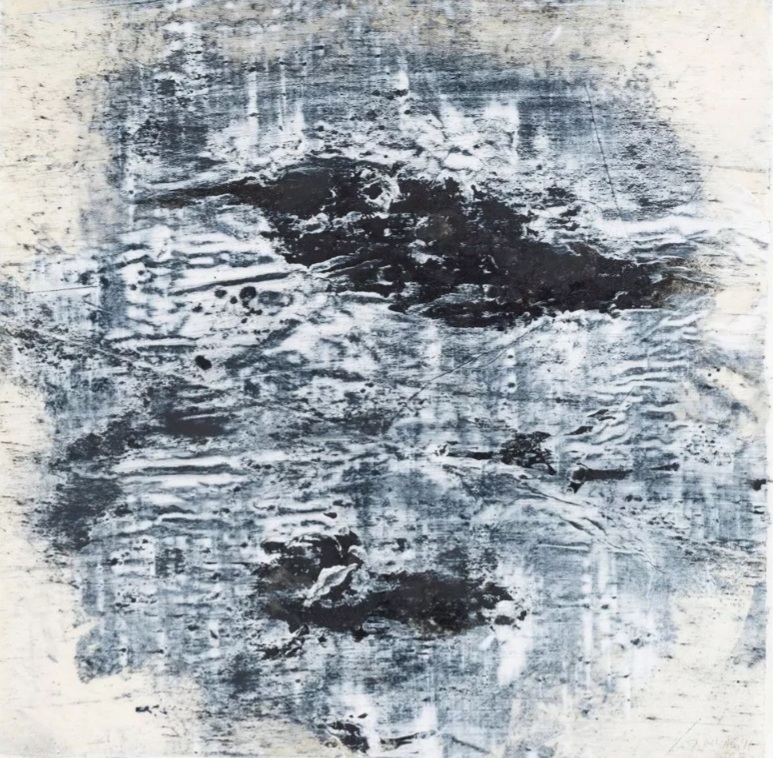
The Epic Reconstruction: The Structure, Existential Philosophy, and World-Poetic Significance of Ardakh Nurgaz’s Long Poem _Dark_
Central Thesis: _Dark_ is not a poem about darkness. Rather, it is a long poem that attempts to rediscover the relations of existence after the successive collapse of the world, the body, history, and language.
The long poem _Dark_ by the Kazakh poet Ardakh Nurgaz possesses a poetic characteristic that deserves particular attention: it brings together the destruction of the individual body, the sedimentation of historical memory, the relationship between the self and the Other, the failure of language, and the cosmic movements of light and darkness within a single, constantly transforming poetic system.
This means that reading _Dark_ cannot be confined to the analysis of imagery, symbolic interpretation, or the conventional categories of modernist poetry. It requires a broader interpretive approach:
_Dark_ should be understood as a modern existential epic without a traditional hero, without a linear narrative of war, and without a predetermined victorious conclusion.
Based on the English text of the poem and the available information about its composition and translation, this essay attempts to reconstruct its poetic significance through six dimensions: epic structure, the politics of the body, historical temporality, the dialectics of light and darkness, the philosophy of language, and intercivilizational poetics.
The poem was originally published on the Bilge literary website on November 9, 2022. According to the publication information, it was originally written in Kazakh, translated into Chinese by Gulnar Akhan, and subsequently translated from Chinese into English by Ouyang Yu. This translation chain is an essential consideration in understanding the linguistic characteristics of the work.
I. The First Reconstruction: From Lyric Poetry to the Modern Existential Epic
Traditional epic poetry generally revolves around heroes, wars, national origins, expeditions, and historical destiny.
Homer’s _Odyssey_, for example, centers on a hero’s return home. _Dark_, however, adopts an entirely different structure.
It has no hero capable of acting with a stable sense of identity.
Its protagonist is, first and foremost, a destroyed body.
The poem opens:
> Completely destroyed I have a body like a hollow cave
In other words:
> Completely destroyed, my body is like a hollow cave.
These two lines establish the ontological starting point of the entire poem.
It is important to note that the poet does not say that he has lost his body. Instead, he says that his body has become a hollow space.
This is a significant distinction:
- The body still exists, but it has lost its integrity.
- The subject still exists, but has lost a stable sense of self-identity.
- The world still exists, but can no longer provide reliable meaning.
- History still exists, but can only be perceived through ruins and remnants.
The body is no longer an intact vessel of life. It becomes an echo chamber for history, trauma, and memory.
The poem further suggests that when stones are thrown into this hollow body, they produce a reverberation lasting a thousand years.
Here, a transformation in epic scale takes place:
The individual body
Hollowness, destruction, trauma.
Historical space
Millennial reverberations, civilizational ruins, buried memories.
Cosmic space
Stars, night, falling celestial bodies, the movement of light.
Existential space
The self, the Other, language, and unknowable destiny.
The epic quality of _Dark_ therefore does not lie in its narration of the complete history of a particular nation. Rather, it lies in its transformation of an individual body into a perceptual field through which the history of civilization can be experienced.
This represents an important possibility for the modern epic:
Instead of having a hero represent a nation, the modern epic allows a wounded body to bear the weight of history.
II. The Second Reconstruction: The Ruins of the Body and the Archaeology of Civilization
The first half of _Dark_ presents a particularly significant group of images:
- The hollow body;
- Stones;
- Parched land;
- The contact between the tongue and the stone;
- Abandoned streets;
- Butterflies;
- Broken pottery;
- Animals that abandon cultivation and begin excavating history;
- Candles and moths.
These images are not isolated decorative elements. They constitute an interconnected system of transformation.
1\. The Body Becomes a Ruin
The body resembles a cave, suggesting that it has ceased to be a living subject with clearly defined boundaries and has instead become a space capable of containing the echoes of history.
This recalls the poetic world of Paul Celan.
In Celan, the body, ashes, death, language, and historical trauma are frequently entangled. _Dark_, however, extends this experience of trauma further into the space of civilization.
The body is not merely wounded flesh. It is also a geological stratum left behind by the destruction of civilization.
2\. The Urn: An Archaeology of Civilizational Memory
One image in the poem deserves particular attention:
> like ghosts that fly out of the urns ruined yesterday
The butterflies appear like ghosts emerging from the urns destroyed yesterday.
The urn possesses a dual nature:
First, it is a material remnant of civilization.
Second, it is a vessel of death, burial, and memory.
The butterfly represents an opposing form of life: lightness, transience, movement, and transformation.
The poem therefore establishes a highly charged relationship:
The urn represents the material remains of civilization, while the butterfly represents the memory of life escaping from those remains.
This is not simply an opposition between life and death. It raises a more profound question: How does life continue to exist, in a ghostlike form, after the destruction of civilization?
3\. Animals Excavating History: The Inversion of Civilizational Narratives
Another particularly important line reads:
> the animals, let out for fresh air and having given up ploughing the field, are digging the history
The animals no longer cultivate the land. Instead, they begin excavating history.
Here, the established order of civilization is reversed.
Normally, human beings create history through agriculture, labor, and writing. In this poem, however, animals take over humanity’s historical activity.
This reversal can be interpreted on three levels:
- The collapse of agricultural order: The land has lost its original productive function.
- The destabilization of anthropocentrism: Animals become the excavators of history.
- The archaeological transformation of historical narrative: History is no longer a continuously developing story but a collection of fragments buried underground.
Particularly noteworthy is that the animals continue excavating history until history becomes faceless.
History loses its subjects, names, and clearly identifiable identities.
This suggests that _Dark_ questions not merely a particular historical period, but the very possibility of narrating history in its entirety.
III. The Third Reconstruction: From Linear History to Geological Time
Time in _Dark_ does not follow the conventions of traditional narrative temporality.
It is not:
Past → Present → Future.
Instead, it follows a different movement:
Destruction → Sedimentation → Reverberation → Reappearance → Disappearance Once Again.
This is a temporal structure with geological characteristics.
History no longer appears as a continuous sequence of events. Instead, it exists as layers of memory of varying depths.
The thousand-year reverberation, the urn destroyed yesterday, burning stars, rising tides, dawn, and dusk collectively establish an overlapping of different temporal scales.
_The Greatest Unsolved Mysteries of Science (Fiction)_
1\. The Transformation of Temporal Scales
| Temporal Scale | Poetic Image | Deeper Significance |
| --- | --- | --- |
| The instantaneous | A stone falling into the body | The occurrence of trauma |
| Yesterday | The broken urn | Historical memory in the immediate past |
| A thousand years | The reverberation emerging from the body | The sedimentation of civilization |
| Cosmic time | Meteors and stars | The infinite scale of existence |
| Cyclical time | Tides, dusk, and dawn | The recurrence of life and history |
Through the collision of these temporal scales, the poem breaks through the limitations of ordinary human experiences of time.
2\. Does This Suggest a Non-Western Conception of Time?
This can be proposed as a research hypothesis, but it requires caution.
Nurgaz’s Kazakh cultural background provides a reason to investigate the possible influence of nomadic culture, steppe geography, and cyclical experiences of time on his poetics.
However, we cannot attribute every temporal structure in the poem directly to nomadic traditions simply on the basis of the poet’s ethnic identity.
A more precise formulation would be:
_Dark_ offers an imagination of time that differs from linear historical consciousness, and this imagination can be examined comparatively in relation to the spatial consciousness of Central Asian nomadic cultures.
Like T. S. Eliot’s _The Waste Land_, it possesses a fragmented conception of history. Nevertheless, the mechanisms through which meaning is generated in the two works are different.
Eliot tends to seek the wholeness of modern civilization through cultural quotations, mythology, and fragments of tradition. _Dark_, by contrast, allows history to reappear in ways that cannot be fully reconstructed, primarily through the body, material remnants, and sensory experience.
IV. The Fourth Reconstruction: Darkness and Light—Not a Binary Opposition, but a Relationship of Mutual Generation
This is arguably the most important dimension of _Dark_ from a poetic perspective.
If darkness is interpreted as evil, death, and nothingness, while light is understood as hope, salvation, and life, the poem will be simplified prematurely.
In reality, light in the poem does not conquer darkness.
Stars burn, move, and disappear, subsequently generating movements resembling waves.
Light is a momentary manifestation.
Darkness, meanwhile, is the space in which manifestation becomes possible.
1\. The Meteor: The Brief Life of Light
The poem reads:
> Black night, black skies, a star, out of countless stars, is lit and slides across the night sky
Among countless stars, one is illuminated and moves across the dark sky.
This moment of light does not alter the overall darkness of the universe.
Yet it makes darkness visible for the first time.
The star is therefore not the opposite of darkness, but an event occurring within darkness itself.
2\. The Candle and the Moth: The Paradox of Salvation
The earlier images of the candle and the moth establish another important relationship.
The candle burns, and the moth is reduced to ashes.
This is not a simple victory of light over darkness. It is the destruction of life as it approaches the light.
Light possesses both seductive and destructive qualities.
This can be compared with certain poetic experiences in Rilke, Trakl, and Celan: light does not necessarily signify salvation, just as death does not necessarily signify absolute finality.
3\. A Model of the Relationship Between Light and Darkness in _Dark_
Darkness
Containment, concealment, sedimentation, the unknown.
Light
Manifestation, burning, transience, disappearance.
Their relationship: mutual generation rather than mutual annihilation.
The existential space of the poem.
Light manifests itself within darkness, while darkness acquires its contours through the manifestation of light.
This is also why the title _Dark_ possesses philosophical significance.
_Dark_ is not merely a visual adjective. It constitutes the existential condition of the entire poem.
V. The Fifth Reconstruction: The Collapse of Language and the Disappearance of the Subject
One of the most important philosophical threads in _Dark_ leads to Martin Heidegger.
The poem begins with the quotation:
> Selves are a dialogue
At the end, it also includes Heidegger’s remarks on Hölderlin’s poetics, concerning humanity, dialogue, and the naming of the gods.
These are not incidental decorative quotations.
They establish an essential question for the entire poem:
If the self is formed through dialogue with the Other, can the self continue to exist when language fails and dialogue is interrupted?
1\. The Tongue Becomes Stone: The Material Crisis of Language
The poem contains the following line:
> when the tongue touches the stone, it turns into a stone
When the tongue touches the stone, the tongue itself becomes stone.
This is an extraordinarily powerful image of language.
The tongue originally represents:
- Language;
- Expression;
- Naming;
- Dialogue;
- The connection between the subject and the world.
The stone, by contrast, represents:
- Silence;
- Hardness;
- The impossibility of communication;
- Material closure.
When the tongue becomes stone, language can no longer guarantee the connection between the subject and the world.
This is not simply a matter of losing speech. It is the materialization of language itself.
Language ceases to be a means of communication and becomes an object of silence.
2\. Why Can Dialogue Never Be Completed?
The poem contains a particularly important paradox.
On the one hand, the poet emphasizes that the self is dialogue.
On the other hand, the subject in the poem can never be fully recognized by the Other.
At the conclusion, the speaker suggests that even while holding a burning candle, his face remains too dark for the other person to recognize.
This means that illumination does not automatically produce understanding.
Even when the subject becomes visible, the Other may still be unable to identify that subject.
This constitutes the existential-philosophical core of _Dark_:
Human beings need the Other in order to form the self, yet the Other can never fully comprehend the self.
3\. From Heidegger to Derrida: Two Different Theoretical Approaches
| Philosophical Approach | Central Question | Manifestation in _Dark_ |
| --- | --- | --- |
| Heidegger | How does language disclose Being? | Dialogue, naming, language, and silence |
| Derrida | Why can meaning never be completely fixed? | The inexhaustibility of the self and the Other |
| Sartre | How does the Other affect self-identity? | Being seen without being recognized |
| Levinas | Does the Other exceed the self’s capacity for understanding? | The Other cannot be completely appropriated |
It is important to emphasize that these are theoretical dialogues, not evidence that the poet directly adopts the philosophical theories of these thinkers.
What makes _Dark_ distinctive is that it does not explain the crisis of language through philosophical concepts. Instead, it allows that crisis to take place directly within its poetic imagery.
VI. The Sixth Reconstruction: The Self and the Other—The Emotional Epic of _Dark_
The second half of _Dark_ undergoes an important transformation.
The first half is primarily concerned with destruction, ruins, the body, and history. The second half gradually moves toward tides, shorelines, bodies, love, and the Other.
This is not a simple transition from darkness to light. It is a movement from the isolated subject toward a relational subject.
1\. The Ocean and the Steppe: Two Forms of Spatial Consciousness
Although _Dark_ contains profound imagery associated with the steppe and the land, its second half repeatedly introduces tides, waves, shores, and water.
This spatial transformation deserves particular attention.
| Steppe Space | Oceanic Space |
| --- | --- |
| Arid land | Flowing water |
| Urns and ruins | Tides and pearls |
| Historical sedimentation | Historical erosion |
| Footprints | Waves |
| The memory of the land | The memory of the body |
The steppe represents a relatively stable historical stratum, whereas the ocean represents an ever-changing network of relationships.
These two spaces are not mutually exclusive in the poem. Rather, they permeate one another.
This gives _Dark_ a distinctive intercivilizational spatial structure: it can be interpreted through the experience of the Kazakh steppe, but also through the perspectives of oceanic poetics and global modernism.
2\. The Body Becomes the Surface on Which History Is Written
One passage reads:
> the history written into your body will be me
In other words:
> The history written into your body will be me.
This is one of the most important lines in the entire poem.
It brings the body, history, and love into a single relationship.
History is usually written in books, on stone monuments, in archives, and on memorials.
Here, however, history is written into the body of the Other.
The body thus becomes a living historical archive.
More importantly, the history inscribed into the Other’s body is, remarkably, “me.”
This produces a complex exchange of identities between the self and the Other:
- I am no longer merely myself.
- You are no longer an object entirely independent of me.
- Through your body, I enter history.
- Your body also becomes part of my existence.
This is a conception of relational subjectivity.
3\. Love Is No Longer a Purely Romantic Emotion
The poem subsequently lists:
> love, hate, jealousy, self-blame, contempt, greed, abjectness
Love, hatred, jealousy, self-blame, contempt, greed, and abjection.
This list of emotions is extremely important.
It does not idealize love.
On the contrary, love coexists with hatred, possessiveness, jealousy, and self-negation.
Love in the poem is therefore not a harmonious union between two complete subjects. It is the disintegration of one subject when confronted with another.
It can be understood as a form of love with ontological significance:
To love someone is to allow the boundaries of one's own existence to enter the existential space of another. This process may produce both fusion and self-destruction.
4\. The Ultimate Other: An Existence That Can Never Be Possessed
One line in the poem reads:
> creating an eternal Other
Here, the Other is not merely a romantic partner. The term can also be understood as an existence that the subject can never fully comprehend or possess.
The conclusion of _Dark_ therefore offers no complete romantic resolution.
Even when the subject holds a candle in an attempt to make himself visible, his face remains indistinct.
The Other still cannot fully recognize him.
This is the deepest tragedy of the entire poem:
The subject longs to be understood, but can never guarantee that he will be understood.
Yet this impossibility of understanding does not mean that dialogue is meaningless.
On the contrary, it makes dialogue an existential activity that can never come to an end.
VII. The Seventh Reconstruction: Rethinking the Epic Structure of _Dark_
When the six dimensions discussed above are integrated, it becomes clear that _Dark_ is not a long poem sustained by conventional chapters, plot, and character relationships.
Instead, it relies on the mutual transformation of images.
In 2025, the Bilge website published a structural analysis of _Dark_, describing its development through three stages: destruction, perception, and fusion. It particularly emphasized bodily perception, nonlinear temporality, and the relationships among symbolic systems.
This analysis offers a useful point of entry into the poem. Nevertheless, some of its broader philosophical claims still require verification through a close examination of the original text.
I would propose taking this reconstruction further by identifying five interpenetrating epic movements.
The Five Epic Movements of _Dark_
1\. The First Movement: Destruction
The hollow body, stones, parched land, and abandoned streets.
The subject and the world lose their original integrity.
2\. The Second Movement: Archaeology
Urns, ghosts, butterflies, and animals excavating history.
Suppressed memories of civilization re-emerge from the ruins.
3\. The Third Movement: Cosmic Revelation
Night, stars, meteors, burning, and tides.
Individual experience is placed within a cosmic scale.
4\. The Fourth Movement: Relational Becoming
Shorelines, bodies, love, history, and the Other.
The subject attempts to re-establish relations of existence through the Other.
5\. The Fifth Movement: Unrecognizability
Indistinct footprints, darkness, candles, and an unrecognizable face.
The subject once again confronts the irreducible distance between the self and the Other.
An important discovery emerges here:
The endpoint of _Dark_ is not the recovery of an intact self, but the recognition that the self can never be fully completed.
It is therefore not an epic of restoration in the traditional sense. Rather, it is an epic about how existence continues to emerge through fragmentation.
VIII. The Eighth Reconstruction: Placing _Dark_ within the Genealogy of the World Long Poem
To understand the literary position of _Dark_, it is insufficient to compare it only with contemporary Chinese-language poetry.
A more productive approach is to situate it within the global genealogy of the modern long poem.
1\. Homer: _The Odyssey_
Epic archetype: Heroism, homecoming, destiny, and cosmic order.
_Dark_ moves in the opposite direction. It has neither a stable hero nor a definite homecoming. Instead, it presents a subject who continually loses his sense of existential orientation.
2\. T. S. Eliot: _The Waste Land_
Central concerns: Fragments of modern civilization, mythological structures, and cultural memory.
Both works begin with the fragmentation of civilization. However, _Dark_ transforms its ruins more extensively into bodily experience and existential relationships.
3\. Paul Celan: Giving Form to Death and the Crisis of Language
Central concerns: Ashes, silence, historical trauma, and the limits of language.
Both poets search for the possibility of poetry at the very edge of linguistic failure. _Dark_ further connects the crisis of language with the body, the Other, and the cosmos.
4\. Ezra Pound: _The Cantos_
Central concerns: Historical collage, civilizational memory, multilingualism, and intercultural structures.
_Dark_ likewise breaks away from a single historical narrative. Its structure, however, is more concentrated on the body and perception than on the extensive assemblage of documentary and historical materials.
5\. Dante: _The Divine Comedy_
Central concerns: Dark spaces, spiritual journeys, existential order, and spiritual transformation.
_Dark_ retains the expansive scale of spiritual exploration but abandons the explicit theological cosmology and redemptive destination of _The Divine Comedy_.
These comparisons reveal a possible literary position for _Dark_:
It inherits the fragmented structures of the modernist long poem without being satisfied with the mere presentation of fragments. It retains the expansive scale of the epic while transforming heroic action into bodily perception and relational becoming.
This is a form of writing that may appropriately be described as an existential epic of the post-heroic age.
IX. The Ninth Reconstruction: From Structure to Dynamic System—The True Formal Innovation of _Dark_
Here, we can advance a concept that goes beyond conventional structural analysis: Dynamic System Poetics.
In 2026, a discussion on the Bilge website concerning Nurgaz’s long-poem practice advanced an important proposition: the unity of a poem does not necessarily depend on a fixed structure. Instead, it can emerge through the continuous interactions among imagery, repetition, variation, memory, sound, space, and subjectivity.
This perspective is particularly suitable for reconsidering _Dark_.
1\. Images Are Not Static Symbols
Consider the following examples:
- The stone initially appears as an external material object, but subsequently becomes a symbol of linguistic silence.
- The body initially appears as an object of destruction, but later becomes the surface upon which history is written.
- Water initially appears as a natural phenomenon, but subsequently becomes a movement of memory, love, and relationships.
- The star initially appears as a cosmic object, but later becomes a form of life manifested momentarily.
- Darkness initially appears as a spatial environment, but ultimately becomes the existential condition through which the subject can never fully comprehend itself.
An image therefore performs different functions in different locations.
It continuously absorbs the meanings of other images while simultaneously transforming its own significance.
2\. The Dynamic Image Network of _Dark_
The Transformational Relationships Among the Core Images
- The body: Trauma and subjectivity.
- The stone: Matter and silence.
- The urn: Civilization and memory.
- The star: Manifestation and disappearance.
- The waves: Time and relationships.
- The Other: The self, love, history, and unrecognizability.
This is a conceptual diagram, not the original sequence of the poem's sections. It illustrates the semantic relationships among its images.
The significance of this system is that the poem does not begin with a complete philosophical idea and then employ images to explain it.
On the contrary, thought emerges through the continuous transformation of images.
This also explains why _Dark_ cannot be adequately understood through conventional thematic classification alone.
Its true organizing principle is the transformation of relationships.
X. The Tenth Reconstruction: From Kazakh Poetry to Global Poetics
The intercultural significance of _Dark_ requires particularly careful discussion.
First and foremost, it is a poem originally written in Kazakh.
This fact is important.
If we approach it exclusively through the Chinese translation and regard it simply as a modernist poem with a Western philosophical background, we risk overlooking its linguistic and cultural origins.
1\. The Linguistic Experience of Kazakh
The sounds, grammar, oral rhythms, and cultural memories of the Kazakh language may play important roles in the work.
However, the English text available to us has undergone a transformation from Kazakh into Chinese and then from Chinese into English.
Consequently, any claims concerning alliteration, consonants, guttural sounds, and the original rhythms of Kazakh must be based on the Kazakh source text.
The phonetic effects of the English translation cannot simply be treated as the sound structure of the original poem.
2\. Steppe Civilization and Modernism
_Dark_ offers a valuable comparative perspective:
Modernist poetics is not an exclusively European intellectual experience.
Historical rupture, the crisis of subjectivity, linguistic failure, civilizational ruins, and existential anxiety can all emerge anew within the modern experiences of different cultures.
However, this does not mean that _Dark_ merely transplants European modernism into Kazakh-language poetry.
More productive research directions include:
- How does steppe geography transform the subject's spatial consciousness?
- How do migration, memory, and belonging in nomadic cultures influence poetic temporality?
- How does the linguistic structure of Kazakh shape the relationships among images?
- How does Central Asian historical experience enter into the ontological questions of global modernism?
These questions are more important than simply classifying the work as modernist or postmodernist.
3\. Positioning within Global Poetics
I believe the potential contribution of _Dark_ can be summarized in three dimensions:
| Dimension | Poetic Contribution |
| --- | --- |
| Civilizational | Bringing Kazakh cultural experience into discussions of the global modern long poem |
| Formal | Establishing the unity of a long poem through image transformation rather than linear narrative |
| Philosophical | Integrating the body, history, language, and the Other into a unified existential inquiry |
Nevertheless, literary interpretation must be distinguished from literary-historical judgment.
It is possible to argue that _Dark_ has the potential to participate in global poetic dialogue. To claim that it has already transformed the history of the world long poem, however, would require broader comparative evidence, a history of scholarly reception, and a more extensive critical history.
XI. The Most Important Critical Questions: Has _Dark_ Truly Completed Its Reconstruction?
An analysis of _Dark_ should not consist exclusively of praise.
Several issues deserve further investigation.
First, does the density of imagery lead to an excessive expansion of meaning?
There are rich connections among the body, urns, butterflies, stones, stars, waves, love, and the Other. Yet not all these connections possess equal interpretive strength.
If every image is interpreted as a symbol of civilization, the cosmos, history, and philosophy, the concrete specificity of the text itself may be lost.
Second, do the philosophical quotations establish a genuinely intrinsic relationship with the poem?
Heidegger’s conception of dialogue provides an important interpretive entry point. However, the presence of a Heideggerian quotation does not automatically establish that the entire poem has accomplished a Heideggerian ontological practice.
The relationship between the quotation and the poem's structure requires further examination.
Third, does the intercultural interpretation respect the original language?
This is an especially important question.
The currently available English version has undergone two stages of translation. A genuine study of Kazakh-language poetics therefore requires access to the original text, a comparison of the Kazakh, Chinese, and English versions, and an investigation of the changes that have taken place in vocabulary, word order, sound, and metaphor during translation.
Fourth, does the poem's conclusion truly achieve fusion?
The poem expresses a desire for the fusion of the self and the Other. Yet the final image remains that of an unrecognizable face.
Fusion is therefore never fully achieved.
This is not necessarily a weakness of the work. It may instead represent one of its most valuable structural decisions: its refusal to provide a falsely complete resolution.
XII. Final Assessment: What, Exactly, Does _Dark_ Reconstruct?
Returning to the original question: Why can _Dark_ be understood as a modern existential epic?
Because it accomplishes five important poetic transformations:
1. The epicization of the body: The individual body becomes a vessel for civilizational trauma and historical memory.
2. The geological transformation of history: History ceases to be a linear narrative and becomes a temporal stratum that continually accumulates, emerges, and disappears.
3. The ontologization of darkness: Darkness ceases to be merely the opposite of light and becomes the space in which existence manifests itself.
4. The materialization of language: Language transforms from a tool of communication into a complex relationship among the body, stone, silence, and existence.
5. The relational transformation of subjectivity: The self is no longer an independent and complete subject but something that continually emerges through its relationship with the eternal Other.
Together, these five transformations constitute the internal epic mechanism of _Dark_.
A Deeper Interpretation
If _The Odyssey_ tells the story of a hero returning to his homeland, and _The Waste Land_ describes how modern civilization confronts its spiritual ruins, then _Dark_ raises another question:
When the body has already been destroyed, history has lost its face, language has turned into stone, and the Other remains unable to recognize us, how can human beings continue to exist?
_Dark_ offers no conventional answer.
It leaves behind only stars, waves, ashes, footprints, and darkness.
Yet within these remnants, the subject continues to attempt to establish a relationship with the world.
I believe this is what makes the work particularly worthy of attention.
It is not a poem about darkness ultimately being conquered by light. Rather, it is a poem about how human beings continue searching for relations of existence within a darkness that can never be entirely eliminated.
The Final Theoretical Proposition
_Dark_ is a dynamic modern epic that takes the body as a vessel of history, ruins as the memory of civilization, darkness as the space of existence, and the Other as the boundary of subjectivity.
Its epic quality does not derive from the victory of a hero, but from the capacity of existence to continue generating itself after the collapse of the world.
XIII. Further Research: What Kind of Academic Framework Can Be Established?
If the preceding analysis is to be developed into a scholarly paper of substantial academic depth, I would suggest the following title:
From the Ruins of the Body to Cosmic Darkness: The Dynamic Epic Structure and Existential Poetics of Ardakh Nurgaz’s_Dark_
The paper could be divided into six chapters:
| Chapter | Central Research Question |
| --- | --- |
| Chapter One | The status of _Dark_ as a modern long poem and its reconstruction of the epic |
| Chapter Two | The body, the urn, and civilizational trauma |
| Chapter Three | Geological time and nonlinear historical consciousness |
| Chapter Four | The dialectics of light and darkness and cosmic imagery |
| Chapter Five | Heidegger, the crisis of language, and the eternal Other |
| Chapter Six | Dynamic System Poetics and the genealogy of the global modern long poem |
The most promising direction for developing an original theoretical contribution would be to situate _Dark_ within a new theory of the long poem:
> The Dynamic Epic: The unity of the epic is no longer established through heroes, plots, and linear history, but through the continuously evolving relationships among the body, memory, imagery, time, language, and the Other.
This concept could be further developed through comparative studies of _Dark_, _The Waste Land_, _The Cantos_, and other nonlinear modern long poems.
It also offers a new theoretical possibility for studying modern epics written in non-European languages.
Textual Sources and Further Reading
-[ArdakhNurgaz,](<https://www.thebilge.kz/e/action/ShowInfo.php?classid=33&id=3891&utm_source=chatgpt.com>)[_Dark_](<https://www.thebilge.kz/e/action/ShowInfo.php?classid=33&id=3891&utm_source=chatgpt.com>)[— English translation of the original poem and translator information](<https://www.thebilge.kz/e/action/ShowInfo.php?classid=33&id=3891&utm_source=chatgpt.com>).
- [How Does Dark Position Itself on the Global Poetic Map? — A study of poetic structure](<https://www.thebilge.kz/e/action/ShowInfo.php?classid=33&id=4129&utm_source=chatgpt.com>).
- [The Birth of Stars at the Place Where Language Collapses — A study of imagery and the structure of trauma](<https://www.thebilge.kz/e/action/ShowInfo.php?classid=33&id=4123&utm_source=chatgpt.com>).
- [The Dynamic System in Dark, Nightmare, and Oil Paintings — A discussion of Dynamic System Poetics](<https://www.thebilge.kz/e/action/ShowInfo.php?classid=33&id=4164&utm_source=chatgpt.com>).
https://www.thebilge.kz/e/action/ShowInfo.php?classid=33&id=3891